
From Dirt to Done: A Complete Build Timeline for a Statesboro Custom Home
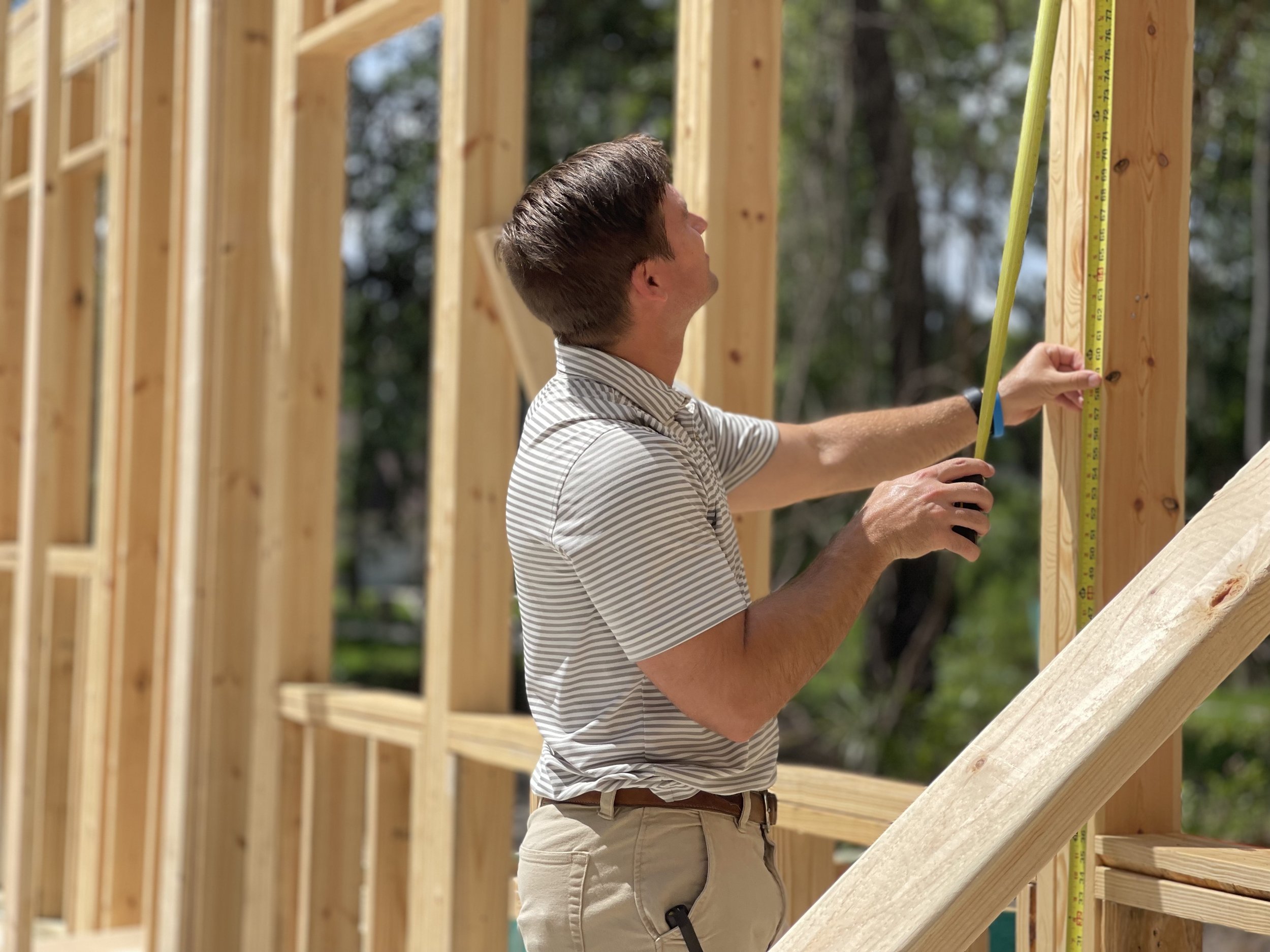
The short version: once we break ground, a custom home with us generally takes seven to nine months to go from dirt to done. The longer, more honest version is that the calendar has two parts — the planning that happens before a shovel touches the ground, and the build itself — and understanding both is the difference between a calm process and a stressful one.
So let’s walk the whole thing, start to finish, the way it actually unfolds on a Bulloch County lot.
Before the Clock Starts: Preconstruction
The build clock starts at groundbreaking, but the project starts well before that. Design, selections, estimating, and permitting all happen first — and how smoothly they go largely determines how smoothly everything after goes.
This is where we lock selections and get permits approved before we build, on purpose. The discipline here is unglamorous and it’s exactly why the build phase stays on track.
How long preconstruction takes varies by how complex your home is and how quickly selections get made — which is genuinely in your hands more than you’d think.
Month 1–2: Site Work and Foundation
Once we break ground, the first phase is everything that makes the lot buildable and gets the home anchored to it:
Clearing and grading the site
Driveway and getting utilities to the home
Well and septic, if the lot isn’t on municipal services
The foundation
It’s the least photogenic phase and one of the most important. Everything above ground depends on what happens here being right and level.
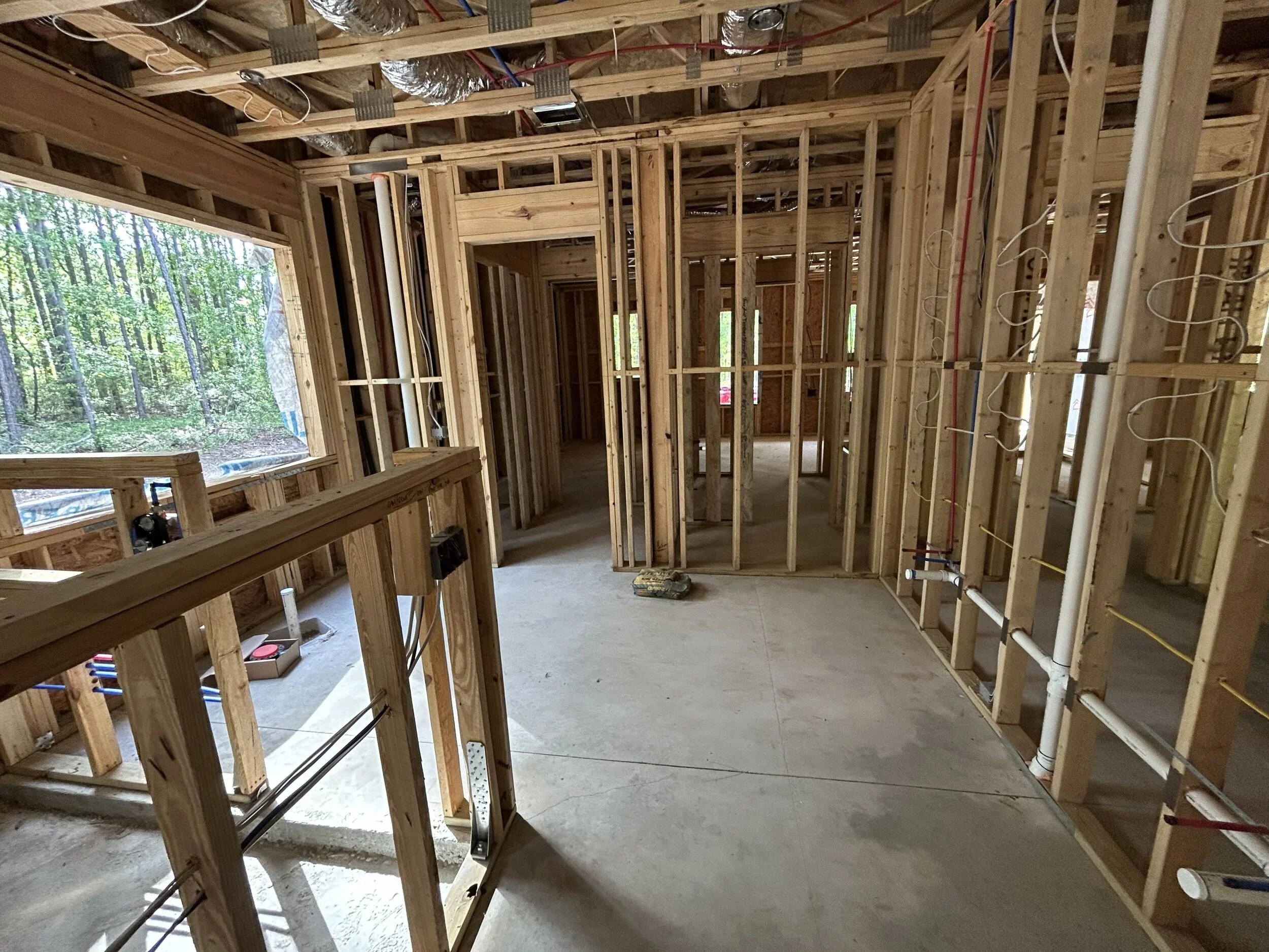
Month 3–4: Framing, Mechanicals, and Full Enclosure
This is the phase that makes it feel real. The floor system, walls, and roof structure go up, and your home goes from a slab to a space you can walk through in a matter of days. Once the roof is sheathed and the home is closed to the weather — “dried-in” — the interior work can begin in earnest.
With the shell closed, the trades come in to install what you’ll never see but will rely on every day: plumbing, electrical, and HVAC, followed by insulation. Then drywall goes up and the inside of the home suddenly reads as rooms instead of studs.
This phase is full of inspections, and that’s a good thing — each one is a checkpoint confirming the hidden work is done right before it’s covered up.
Month 5–7: Finishes — Where It Becomes Yours
Now the home turns into the one you picked. Cabinets, countertops, flooring, tile, trim, paint, fixtures, lighting — the selections you made in preconstruction get installed one after another. This is the most satisfying stretch to watch, because every week the house looks more like the photos in your head.
The Final Stretch: Punch List and Close
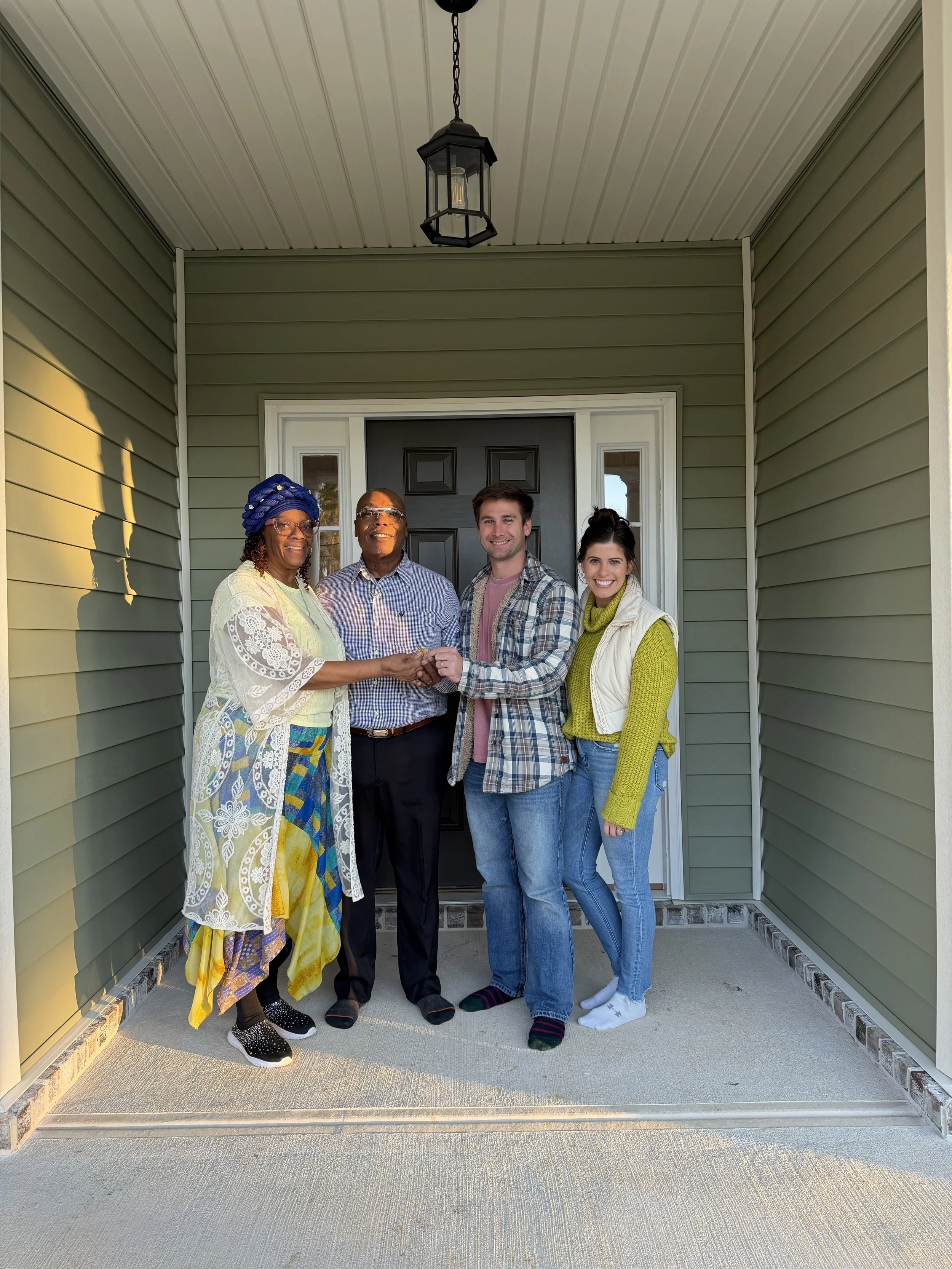
Before you get the keys, we work a detailed punch list — a careful, room-by-room walk to catch and fix every small thing so the home is genuinely finished, not just mostly finished. Then final inspections, a final walkthrough with you, and the keys.
What Moves the Timeline
Seven to nine months of build time is realistic, not a guarantee — and the things that stretch it are usually preventable. The big ones: selections made late, change orders mid-build, weather, and permitting pace. The first two are the ones you control, and locking your choices early in preconstruction is the single best thing you can do to protect your timeline. Throughout, you can watch every phase in real time in your JobTread portal, so you always know exactly where things stand.
Let’s Map Your Timeline
Every build is a little different, and the best way to understand yours is to talk through your specific home and lot. We’ll give you an honest schedule — not a fantasy date to win the job, but a real one we intend to hit.
Let’s Have the First Conversation
Every Hollingsworth home is backed by our 1-year workmanship, 2-year systems, and 10-year structural warranties — built to last.
Reach out to Hollingsworth Homes for a realistic, start-to-finish timeline built around your home — not a number designed to sound good.