
How to Design a Mudroom That Actually Works for Your Georgia Lifestyle
Picture a normal afternoon. Kids pile in from school, backpacks hit the floor, shoes land wherever, the dog tracks in half the yard, and somebody’s cleats are caked in dirt or clay. Where does all of that go?
If the answer is “the kitchen,” your home is fighting you. A well-designed mudroom is the unsung hero of a family house — the buffer that catches the mess of coming and going before it reaches your living space. It’s also one of the most requested rooms we build, and one of the easiest to get wrong. Here’s how to get it right.
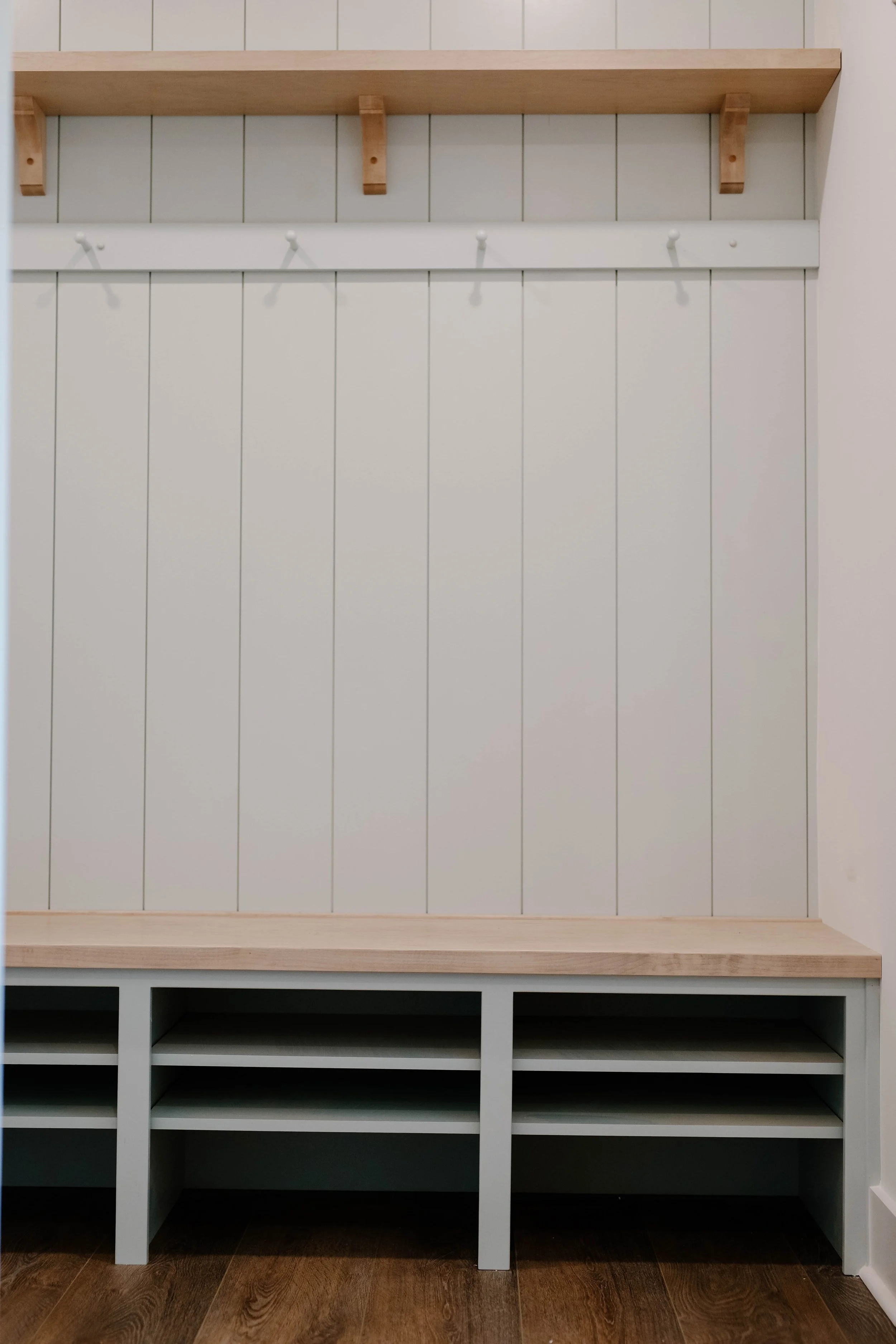
Put It Where You Actually Enter
The first rule of a mudroom is location: it belongs at the door your family actually uses, which is almost always the one from the garage or the side, not the formal front door. A beautiful drop zone on the wrong side of the house goes unused. We design the mudroom right where real life walks in, so it works without anyone having to think about it.
Build In a Spot for Everything
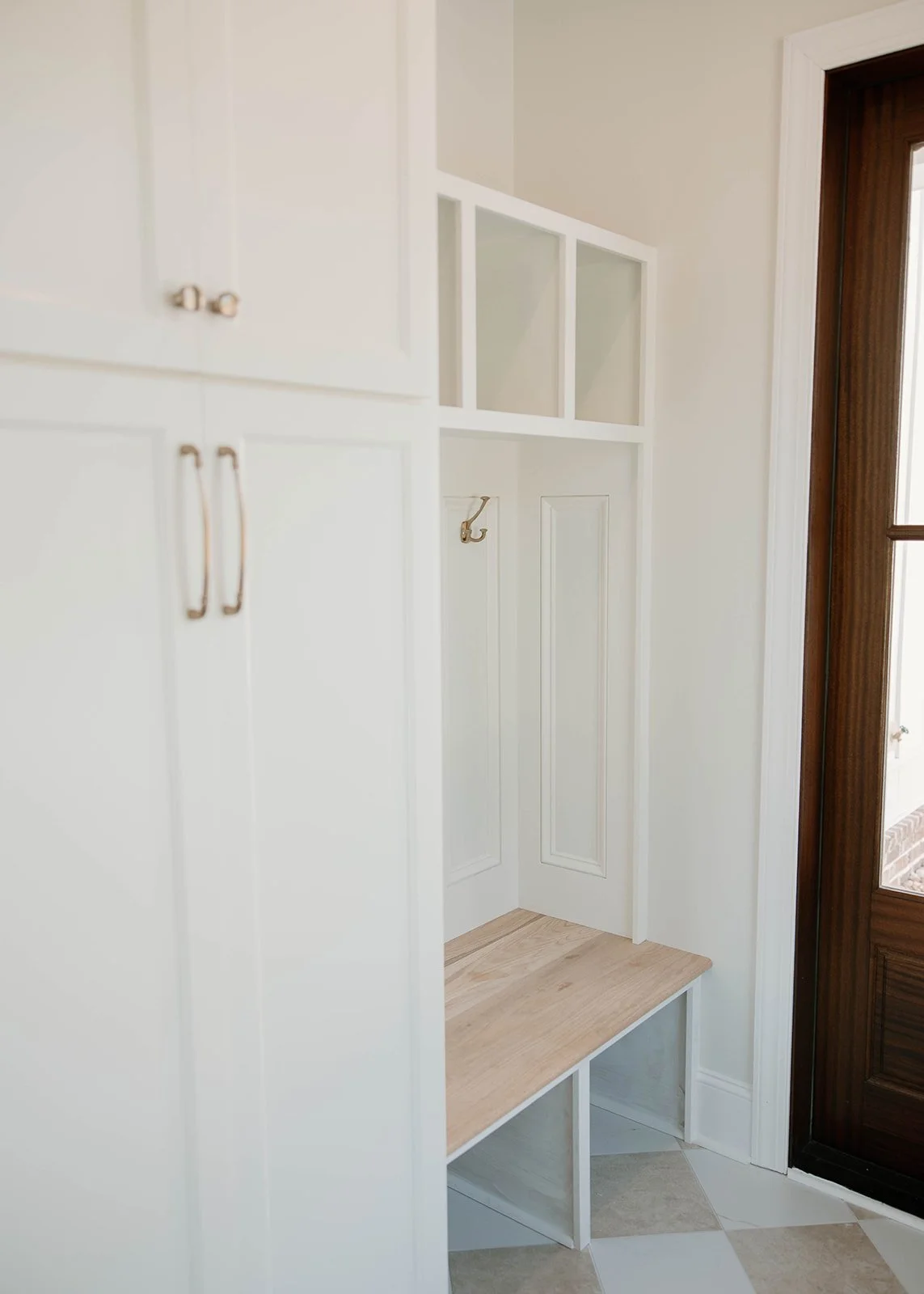
A mudroom earns its keep through smart, durable storage. The pieces that consistently work:
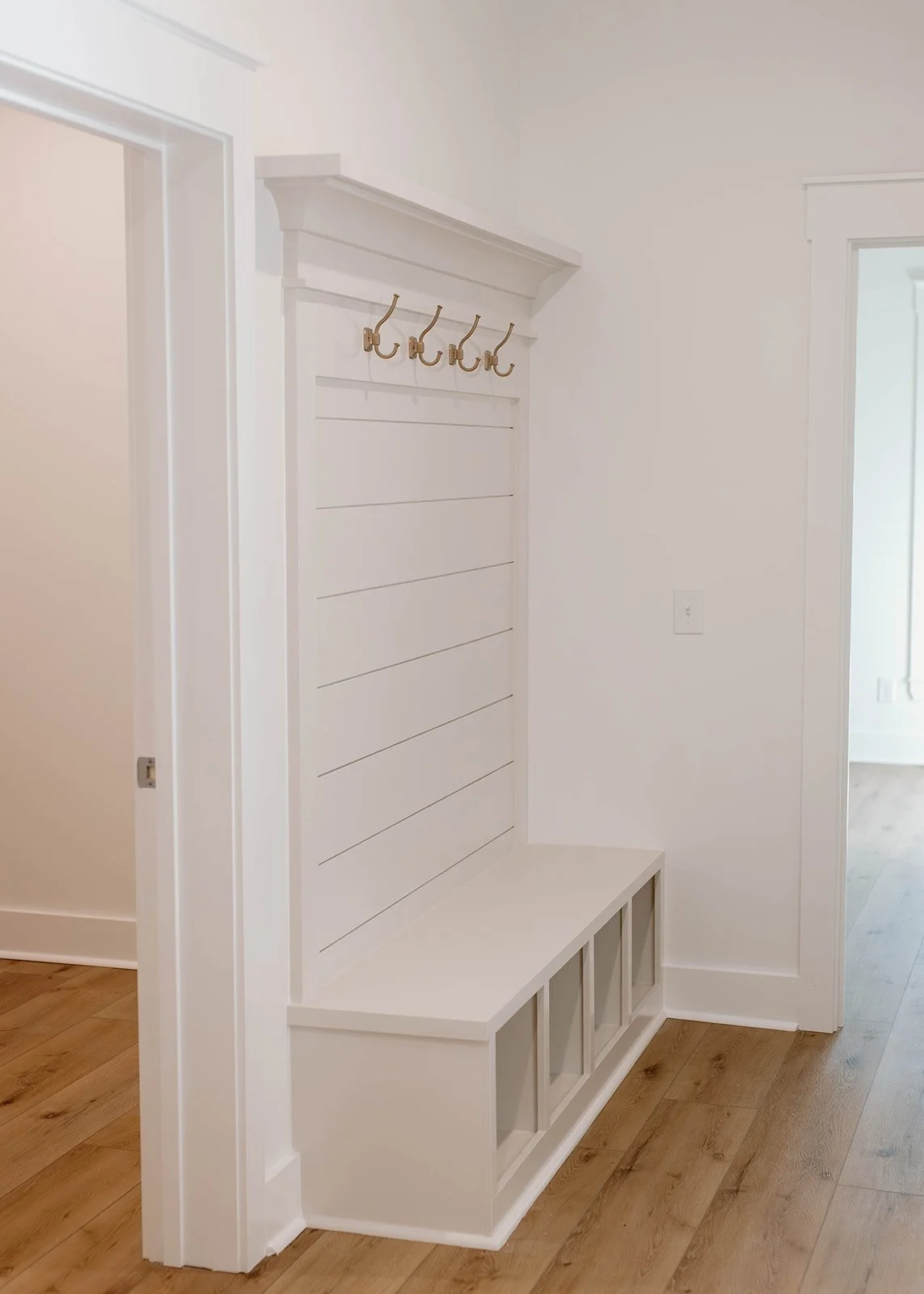
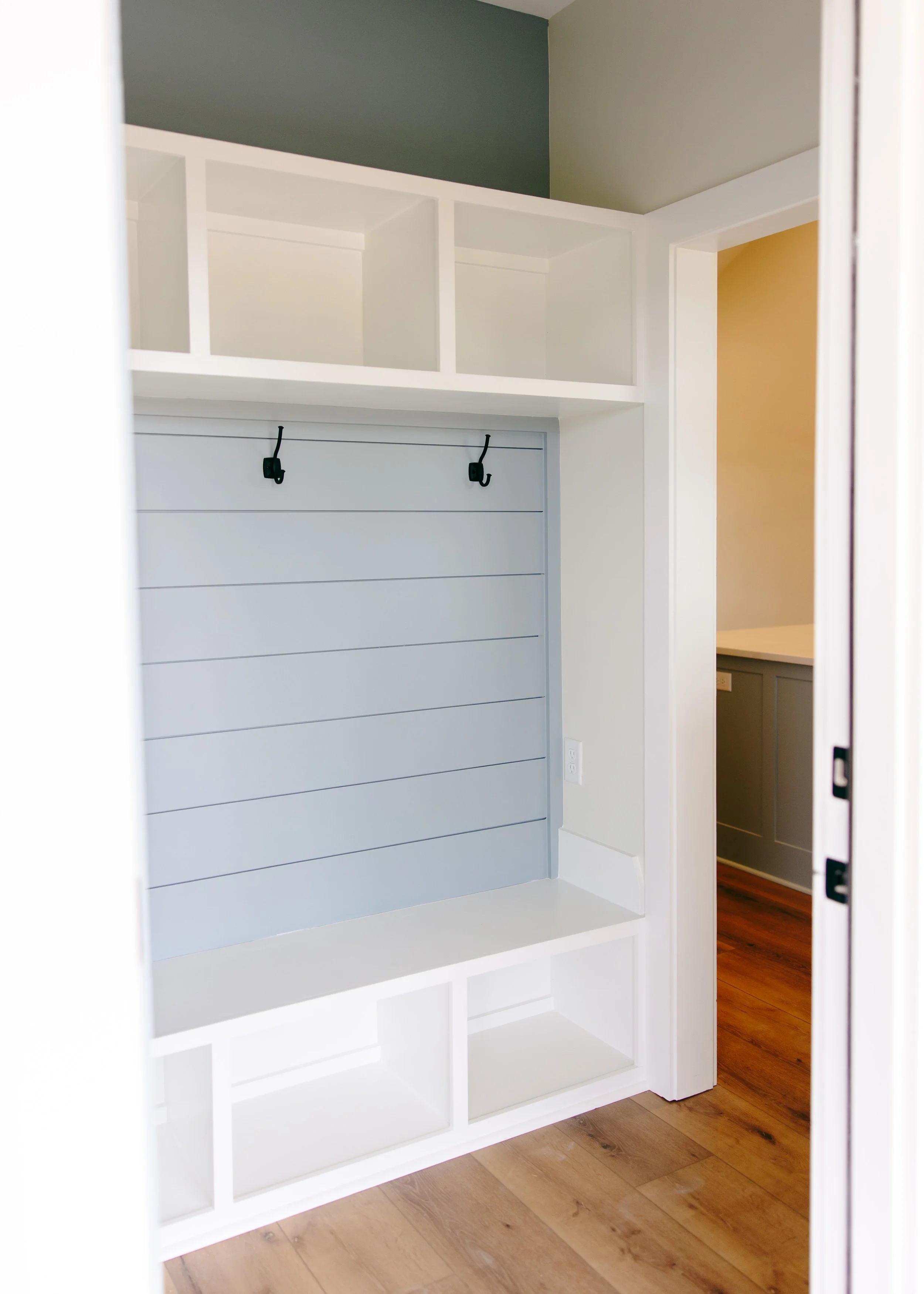
A bench to sit on while wrestling shoes on and off — non-negotiable with kids.
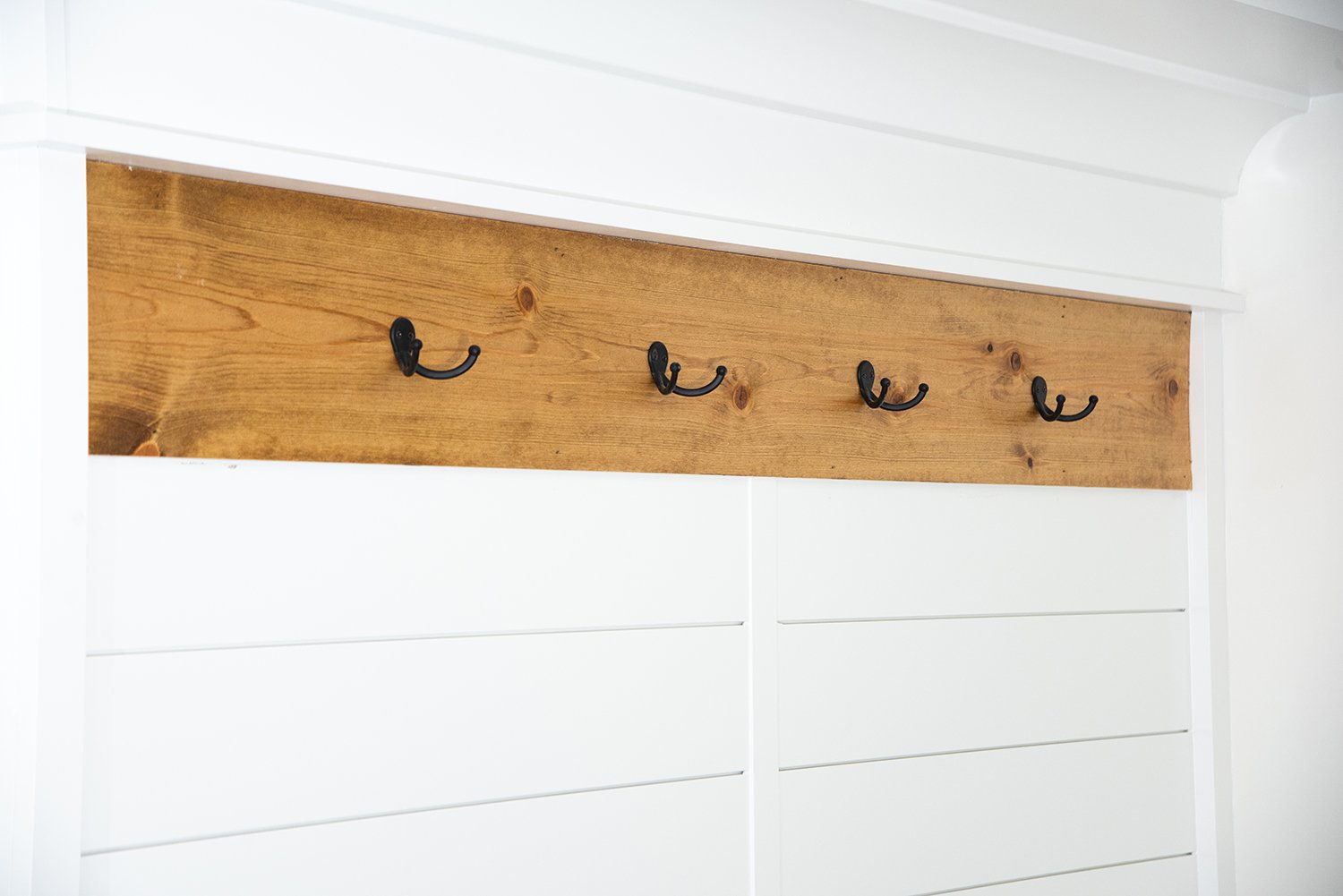
Hooks at kid height and adult height for backpacks, jackets, leashes, and hats. Hooks beat hangers because kids will actually use them.
Cubbies or lockers per person, so everyone has a home for their stuff and the blame for the lost shoe is clear.
Closed cabinets up top for the seasonal and the ugly — sunscreen, bug spray, the stuff you don’t want on display.
A drop zone for keys, mail, and chargers so they stop migrating to the kitchen counter.
Choose Floors and Surfaces That Survive Real Life
This is where Georgia living sets the rules. Whatever goes on a mudroom floor has to shrug off dirt, dog paws, wet shoes, and daily abuse. We steer clients toward durable, easy-clean tile or luxury vinyl that wipes up and doesn’t show every scuff — never something precious.
The same logic applies to the bench top and lower walls: wipeable, tough, and forgiving. A mudroom that’s hard to clean won’t stay nice, and a mudroom that doesn’t stay nice has failed at its one job.
.
The Extras Worth Considering
Depending on your family, a few additions turn a good mudroom into a great one:
A dog wash or utility sink. For muddy paws and muddy kids, a tiled wash station near the entry is a Georgia-lifestyle favorite.
A second laundry connection or hamper. Dropping dirty sports clothes right at the door keeps them out of the bedrooms.
A charging drawer. Devices land and charge in one spot instead of cluttering the counter.
A pet station. Food, leashes, and bowls tucked into the cabinetry.
Size It Honestly
A mudroom doesn’t have to be large, but it does have to be sized to your actual household. A family of five with two dogs and three sports needs more landing space than a couple who travels light.
So we plan it by counting: how many people, how many backpacks, how many pairs of muddy shoes on a bad day. Then we build in a little more capacity than that, because families and their stuff tend to grow. A mudroom designed for your busiest afternoon, not your tidiest one, is the one that actually keeps the rest of the house calm.
Design It Around Your Chaos
The best mudroom is built around your family’s specific mess — how many of you, how many shoes, dogs or no dogs, sports or no sports. Tell us how your afternoons actually go, and we’ll design the room that absorbs them.
Let’s Plan Your Family’s Drop Zone
A mudroom is a small room with an outsized effect on whether the rest of your house stays calm. Get it right and you’ll wonder how you ever lived without it. We’d love to design one around your real life — dirt, cleats, dog, and all.
Reach out to Hollingsworth Homes and let’s get to know each other — and let’s build a mudroom that catches the chaos before it reaches your kitchen.